
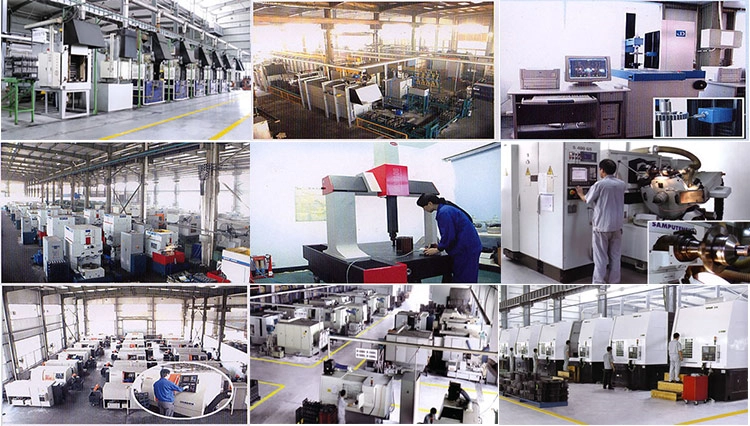
WHY CHOOSE US
We have exported our products to clients around the world and earned a good reputation because of our superior product quality and after-sales service.
We warmly welcome customers both at home and abroad to contact us to negotiate business, exchange information and cooperate with us.
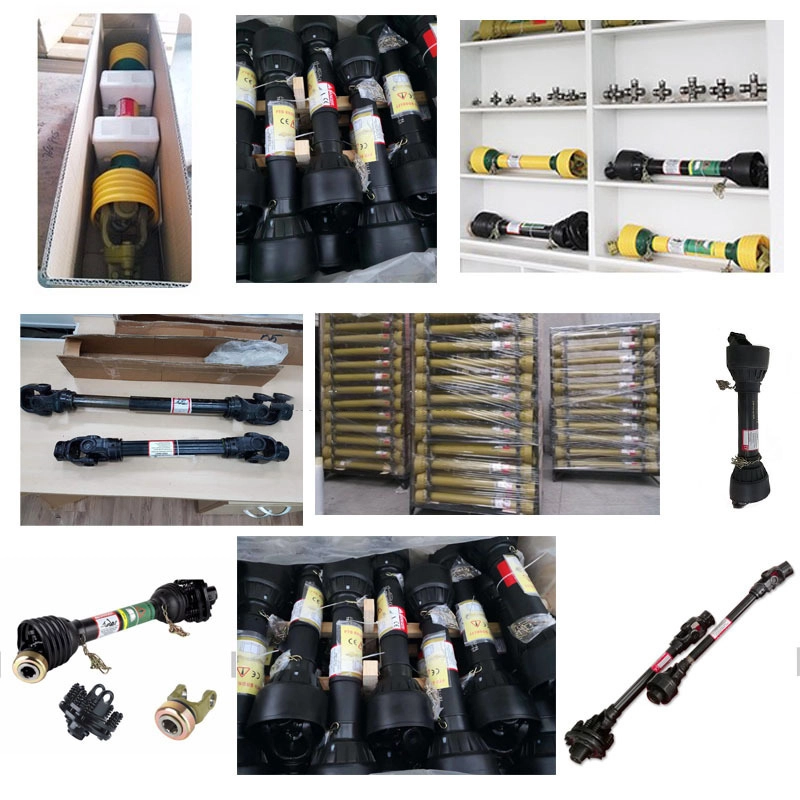
Agricultural Pto Shaft
A power take-off or power takeoff (PTO) Drive Shaft is any of several methods for taking power from a power source, such as a running engine, and transmitting it to an application such as an attached implement or separate machines.
More than 20 and 10 kinds of end yokes and safety devices can be chosen Ordered according to customer’s requirements
1. We provide pto shaft series 1#, 2#, 3#, 4#, 5#, 6#, 7#, 8#.
2.Cross journal specifications: series1: 22 54mm series 2: 23.8 61.3mm series 3: 27 70mm series 4: 27 74.6mm series 5: 30.2 80mm series 6: 30.2 92mm series 7: 30.25106.35mm series 8: 35 106.5mm
3.Types of tube: triangle profile tube, lemon profile tube.
4. Minimum overall length: 600-1800mm or 27″-60″
5.End yokes & safety devices: quick release yokes, plain bore yokes, friction
type torque limiters, ratchet type torque limiter, shear bolt torque limiter, etc.
6.Plastic safety guard: black or yellow.
Power Take Off Shafts for all applications
A power take-off or power takeoff (PTO) is any of several methods for taking power from a power source, such as a running engine, and transmitting it to an application such as an attached implement or separate machines.
Most commonly, it is a splined drive shaft installed on a tractor or truck allowing implements with mating fittings to be powered directly by the engine.
Semi-permanently mounted power take-offs can also be found on industrial and marine engines. These applications typically use a drive shaft and bolted joint to transmit power to a secondary implement or accessory. In the case of a marine application, such shafts may be used to power fire pumps.


PTO Safety
- PTO guards should always be in place. Most accidents occur when clothing, shoes laces or even limbs are caught by a spinning and unguarded PTO shaft. The PTO should always be disengaged when not in operation. Many older tractors, may no longer have PTO shields. Over time they may have become damaged and removed. It is advisable to replace or repair PTO guards to reduce the risk of injury.
- Keep all components of PTO systems shielded and guarded
- Regularly test driveline guards by spinning or rotating them to ensure that they have not become stuck to the shaft.
- Disengage the PTO and shut off the tractor before dismounting to clean, repair, service, or adjust machinery.
- Always walk around tractors and machinery instead of stepping over a rotating shaft.
- Always use the driveline recommended for your machine. Never switch drivelines among different machines.
- Position the tractor’s drawbar properly for each machine used to help prevent driveline stress and separation on uneven terrain and during tight turns.
- Reduce PTO shaft abuse by observing the following: avoid tight turns that pinch rotating shafts between the tractor and machine; keep excessive telescoping to a minimum; engage power to the shaft gradually; and avoid over tightening of slip clutches on PTO-driven machines.
- Be sure PTO driveline is securely locked onto the tractor PTO stub shaft.
- Keep universal joints in phase. (If unfamiliar with this term, check the operator manual or talk with a farm implement dealer.)
- Stop the tractor engine and disengage the PTO to work on the machine or unclog it.
- Keep guards in place.
- Wear close fitting clothing to prevent entanglement of loose clothing parts.
- Secure long hair under a hat when working around the PTO.
- Instruct all operators about the hazards of the PTO.
- Keep children away from all turning parts of the machine not just the PTO.