
Product Description
Product Details
A coupling is a mechanical component that is used to firmly connect the driving shaft and driven shaft in different mechanisms together, rotate together, and transmit motion and torque. It is also sometimes used to connect shafts and other parts (e.g. gears, pulleys, etc.). It usually consists of 2 parts, which are connected by a key or clamping fit, respectively, and fastened at the 2 shaft ends. Couplings can compensate for deviations (including axial, radial, angular or combined offset) between 2 shafts due to inaccurate manufacturing and installation, deformation or thermal expansion during operation, as well as shock and vibration absorption. The most commonly used couplings have been standardized or normalized. In general, it is only necessary to select the type of coupling correctly and determine the type and size of the coupling. If necessary, check and calculate the carrying capacity of the vulnerable and weak links; When the rotational speed is high, it is necessary to check the centrifugal force on the outer edge and the deformation of the elastic element for balance detection.
Couplings are used to connect shafts in different mechanisms, mainly by rotation, thus transferring torque. Under the action of high-speed power, the coupling has the function of buffering and damping, and the coupling has good service life and working efficiency.
The function of the coupling
a device that connects 2 shafts or shafts with rotating parts and rotates together in the process of transmitting motion and power and does not break away under normal circumstances. Sometimes, it is also used as a safety device to prevent the connected parts from bearing excessive loads and play the role of overload protection. The coupling is installed between the active side and the passive side of the power transmission, which plays the role of transferring torque, compensating the installation deviation between shafts, absorbing equipment vibration and buffering load impact. One of the functions of couplings is to absorb and compensate for deviations between shafts through their own deformation. The greater the elasticity, the stronger the ability to absorb the deviation; The less flexibility you have, the less ability you have to absorb deviations. In general, the deviation between the shaft and the shaft can be divided into the following 3 aspects: The connection between the coupling and the peripheral equipment is achieved by inserting the shaft of the device into the shaft hole of the coupling.
1. The role of the coupling is to connect the 2 shafts in different mechanisms (drive shaft and driven shaft) to rotate and transmit torque together, and some couplings also have the role of buffering, damping and improving the dynamic performance of the shafting.
2. Eliminate the inertia of the radial force, connect the motor spindle with the load, and use a coupling to weaken the starting power when the motor starts.
3. Power conduction, transmission of power and torque (improve the performance of the transmission system)
4. Different degrees of vibration reduction and buffering
5. Disconnect when the load is too large to play a protective role
6. Good for maintenance
7. Change the drive direction
8. Concentricity correction (different degrees of axial, radial and angular compensation performance)
The types of couplings
Bellows coupling
The bellows coupling is composed of 2 hubs and thin-walled bellows that are welded or bonded together. The input end of the coupling structure is a clamping structure, and the pre-tightening force is generated by clamping screws, and the power input shaft is firmly connected with the clamping hoop. Flexible and rigid stainless steel bellows have the ability to correct radial, axial and angular deviations, transmit torque with zero backlash, and have different bushings designed to meet different equipment requirements.
A plum coupling
Plum coupling is a widely used coupling, elastomer is a balance accessory, can zero back backlash transfer torque and shock absorption. The different types of elastomers determine the characteristics of the entire drive system. Zero back backlash is achieved through a pre-pressure between the 2 coupling bushing and the elastomer. Its elastomer is usually composed of engineering plastics or rubber. Because elastomers have the function of buffering and reducing vibration, they are widely used in the case of strong vibration.
Safety coupling
The safety coupling mainly relies on the spring force and works with the shape, which can protect the adjacent drive components from damage caused by overload. Divided into synchronous type, stepping type 60°, failure protection type, closed. Features of a special butterfly spring system. No torque transfer is possible until the torque control nut is linked to the butterfly spring to apply pressure. The service life of the safety coupling is largely determined by the speed at which the coupling is disengaged and the holding time of the coupling. The safety coupling is not worn when it is engaged, does not require maintenance, and does not require additional refueling.
Rigid coupling
The rigid coupling is actually a torsional rigid coupling. Even under load, there is no turning clearance. Even if there is a deviation that creates a load, the rigid coupling is still rigid to transmit torque. Rigid couplings need to be used to connect 2 shafts in strict alignment without relative misalignment, so they are used less in motor test systems. Of course, if the relative displacement can be successfully controlled (the alignment accuracy is high enough), rigid coupling can also play an excellent role in the application. In particular, the small size rigid coupling has the advantages of light weight, ultra-low inertia and high sensitivity. In practical applications, rigid couplings have the advantages of maintenance-free, ultra-oil resistance and corrosion resistance.
Long shaft coupling
The standard length of the long-shaft coupling is up to 6 meters, and no intermediate support is required. The 2 ends are connected by high-performance stainless steel or high-strength aluminum, and the middle pipe is made of different materials such as steel, aluminum or carbon fiber. The allowable deviation range, speed and torque of the standard model should be reduced by 30%. The allowable working speed depends on the total length of the joint shaft and can also be adjusted according to demand.
Diaphragm coupling
Diaphragm couplings transfer torque by friction and diaphragm assembly, so there are no stress concentrations, backbacklash and micro-displacement that occur when torque is transferred through shoulder bolts. It has a near unlimited service life and increases the torsional rigidity of the individual components of the complete coupling, which can compensate for a variety of combined shaft assembly errors as a percentage of the total allowable error value listed in the data sheet. The sum of the percentages of the 3 errors cannot exceed 100%.
Product Description
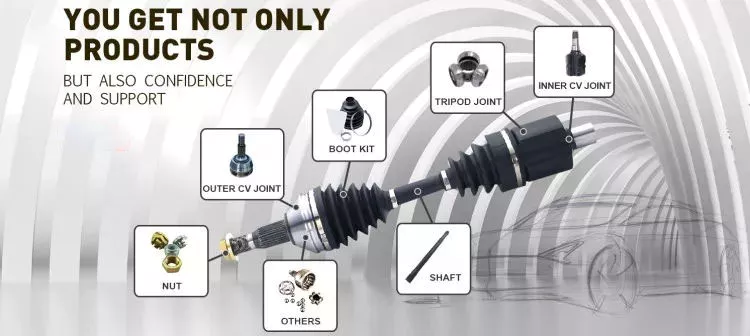
As a professional manufacturer for propeller shaft, we have +1000 items for all kinds of car, At present, our products are mainly sold in North America, Europe, Australia, South Korea, the Middle East and Southeast Asia and other regions, applicable models are European cars, American cars, Japanese and Korean cars, etc. /* October 22, 2571 15:47:17 */(()=>{function d(e,r){var a,o={};try{e&&e.split(“,”).forEach(function(e,t){e&&(a=e.match(/(.*?):(.*)$/))&&1
How do drive shafts ensure efficient power transfer while maintaining balance?
Drive shafts employ various mechanisms to ensure efficient power transfer while maintaining balance. Efficient power transfer refers to the ability of the drive shaft to transmit rotational power from the source (such as an engine) to the driven components (such as wheels or machinery) with minimal energy loss. Balancing, on the other hand, involves minimizing vibrations and eliminating any uneven distribution of mass that can cause disturbances during operation. Here’s an explanation of how drive shafts achieve both efficient power transfer and balance:
1. Material Selection:
The material selection for drive shafts is crucial for maintaining balance and ensuring efficient power transfer. Drive shafts are commonly made from materials such as steel or aluminum alloys, chosen for their strength, stiffness, and durability. These materials have excellent dimensional stability and can withstand the torque loads encountered during operation. By using high-quality materials, drive shafts can minimize deformation, flexing, and imbalances that could compromise power transmission and generate vibrations.
2. Design Considerations:
The design of the drive shaft plays a significant role in both power transfer efficiency and balance. Drive shafts are engineered to have appropriate dimensions, including diameter and wall thickness, to handle the anticipated torque loads without excessive deflection or vibration. The design also considers factors such as the length of the drive shaft, the number and type of joints (such as universal joints or constant velocity joints), and the use of balancing weights. By carefully designing the drive shaft, manufacturers can achieve optimal power transfer efficiency while minimizing the potential for imbalance-induced vibrations.
3. Balancing Techniques:
Balance is crucial for drive shafts as any imbalance can cause vibrations, noise, and accelerated wear. To maintain balance, drive shafts undergo various balancing techniques during the manufacturing process. Static and dynamic balancing methods are employed to ensure that the mass distribution along the drive shaft is uniform. Static balancing involves adding counterweights at specific locations to offset any weight imbalances. Dynamic balancing is performed by spinning the drive shaft at high speeds and measuring any vibrations. If imbalances are detected, additional adjustments are made to achieve a balanced state. These balancing techniques help minimize vibrations and ensure smooth operation of the drive shaft.
4. Universal Joints and Constant Velocity Joints:
Drive shafts often incorporate universal joints (U-joints) or constant velocity (CV) joints to accommodate misalignment and maintain balance during operation. U-joints are flexible joints that allow for angular movement between shafts. They are typically used in applications where the drive shaft operates at varying angles. CV joints, on the other hand, are designed to maintain a constant velocity of rotation and are commonly used in front-wheel-drive vehicles. By incorporating these joints, drive shafts can compensate for misalignment, reduce stress on the shaft, and minimize vibrations that can negatively impact power transfer efficiency and balance.
5. Maintenance and Inspection:
Regular maintenance and inspection of drive shafts are essential for ensuring efficient power transfer and balance. Periodic checks for wear, damage, or misalignment can help identify any issues that may affect the drive shaft’s performance. Lubrication of the joints and proper tightening of fasteners are also critical for maintaining optimal operation. By adhering to recommended maintenance procedures, any imbalances or inefficiencies can be addressed promptly, ensuring continued efficient power transfer and balance.
In summary, drive shafts ensure efficient power transfer while maintaining balance through careful material selection, thoughtful design considerations, balancing techniques, and the incorporation of flexible joints. By optimizing these factors, drive shafts can transmit rotational power smoothly and reliably, minimizing energy losses and vibrations that can impact performance and longevity.

What safety precautions should be followed when working with drive shafts?
Working with drive shafts requires adherence to specific safety precautions to prevent accidents, injuries, and damage to equipment. Drive shafts are critical components of a vehicle or machinery’s driveline system and can pose hazards if not handled properly. Here’s a detailed explanation of the safety precautions that should be followed when working with drive shafts:
1. Personal Protective Equipment (PPE):
Always wear appropriate personal protective equipment when working with drive shafts. This may include safety goggles, gloves, steel-toed boots, and protective clothing. PPE helps protect against potential injuries from flying debris, sharp edges, or accidental contact with moving parts.
2. Lockout/Tagout Procedures:
Before working on a drive shaft, ensure that the power source is properly locked out and tagged out. This involves isolating the power supply, such as shutting off the engine or disconnecting the electrical power, and securing it with a lockout/tagout device. This prevents accidental engagement of the drive shaft while maintenance or repair work is being performed.
3. Vehicle or Equipment Support:
When working with drive shafts in vehicles or equipment, use proper support mechanisms to prevent unexpected movement. Securely block the vehicle’s wheels or utilize support stands to prevent the vehicle from rolling or shifting during drive shaft removal or installation. This helps maintain stability and reduces the risk of accidents.
4. Proper Lifting Techniques:
When handling heavy drive shafts, use proper lifting techniques to prevent strain or injuries. Lift with the help of a suitable lifting device, such as a hoist or jack, and ensure that the load is evenly distributed and securely attached. Avoid lifting heavy drive shafts manually or with improper lifting equipment, as this can lead to accidents and injuries.
5. Inspection and Maintenance:
Prior to working on a drive shaft, thoroughly inspect it for any signs of damage, wear, or misalignment. If any abnormalities are detected, consult a qualified technician or engineer before proceeding. Regular maintenance is also essential to ensure the drive shaft is in good working condition. Follow the manufacturer’s recommended maintenance schedule and procedures to minimize the risk of failures or malfunctions.
6. Proper Tools and Equipment:
Use appropriate tools and equipment specifically designed for working with drive shafts. Improper tools or makeshift solutions can lead to accidents or damage to the drive shaft. Ensure that tools are in good condition, properly sized, and suitable for the task at hand. Follow the manufacturer’s instructions and guidelines when using specialized tools or equipment.
7. Controlled Release of Stored Energy:
Some drive shafts, particularly those with torsional dampers or other energy-storing components, can store energy even when the power source is disconnected. Exercise caution when working on such drive shafts and ensure that the stored energy is safely released before disassembly or removal.
8. Training and Expertise:
Work on drive shafts should only be performed by individuals with the necessary training, knowledge, and expertise. If you are not familiar with drive shafts or lack the required skills, seek assistance from qualified technicians or professionals. Improper handling or installation of drive shafts can lead to accidents, damage, or compromised performance.
9. Follow Manufacturer’s Guidelines:
Always follow the manufacturer’s guidelines, instructions, and warnings specific to the drive shaft you are working with. These guidelines provide important information regarding installation, maintenance, and safety considerations. Deviating from the manufacturer’s recommendations may result in unsafe conditions or void warranty coverage.
10. Disposal of Old or Damaged Drive Shafts:
Dispose of old or damaged drive shafts in accordance with local regulations and environmental guidelines. Improper disposal can have negative environmental impacts and may violate legal requirements. Consult with local waste management authorities or recycling centers to ensure appropriate disposal methods are followed.
By following these safety precautions, individuals can minimize the risks associated with working with drive shafts and promote a safe working environment. It is crucial to prioritize personal safety, use proper equipment and techniques, and seek professional help when needed to ensure the proper handling and maintenance of drive shafts.

What benefits do drive shafts offer for different types of vehicles and equipment?
Drive shafts offer several benefits for different types of vehicles and equipment. They play a crucial role in power transmission and contribute to the overall performance, efficiency, and functionality of various systems. Here’s a detailed explanation of the benefits that drive shafts provide:
1. Efficient Power Transmission:
Drive shafts enable efficient power transmission from the engine or power source to the wheels or driven components. By connecting the engine or motor to the driven system, drive shafts efficiently transfer rotational power, allowing vehicles and equipment to perform their intended functions. This efficient power transmission ensures that the power generated by the engine is effectively utilized, optimizing the overall performance and productivity of the system.
2. Versatility:
Drive shafts offer versatility in their applications. They are used in various types of vehicles, including cars, trucks, motorcycles, and off-road vehicles. Additionally, drive shafts are employed in a wide range of equipment and machinery, such as agricultural machinery, construction equipment, industrial machinery, and marine vessels. The ability to adapt to different types of vehicles and equipment makes drive shafts a versatile component for power transmission.
3. Torque Handling:
Drive shafts are designed to handle high levels of torque. Torque is the rotational force generated by the engine or power source. Drive shafts are engineered to efficiently transmit this torque without excessive twisting or bending. By effectively handling torque, drive shafts ensure that the power generated by the engine is reliably transferred to the wheels or driven components, enabling vehicles and equipment to overcome resistance, such as heavy loads or challenging terrains.
4. Flexibility and Compensation:
Drive shafts provide flexibility and compensation for angular movement and misalignment. In vehicles, drive shafts accommodate the movement of the suspension system, allowing the wheels to move up and down independently. This flexibility ensures a constant power transfer even when the vehicle encounters uneven terrain. Similarly, in machinery, drive shafts compensate for misalignment between the engine or motor and the driven components, ensuring smooth power transmission and preventing excessive stress on the drivetrain.
5. Weight Reduction:
Drive shafts contribute to weight reduction in vehicles and equipment. Compared to other forms of power transmission, such as belt drives or chain drives, drive shafts are typically lighter in weight. This reduction in weight helps improve fuel efficiency in vehicles and reduces the overall weight of equipment, leading to enhanced maneuverability and increased payload capacity. Additionally, lighter drive shafts contribute to a better power-to-weight ratio, resulting in improved performance and acceleration.
6. Durability and Longevity:
Drive shafts are designed to be durable and long-lasting. They are constructed using materials such as steel or aluminum, which offer high strength and resistance to wear and fatigue. Drive shafts undergo rigorous testing and quality control measures to ensure their reliability and longevity. Proper maintenance, including lubrication and regular inspections, further enhances their durability. The robust construction and long lifespan of drive shafts contribute to the overall reliability and cost-effectiveness of vehicles and equipment.
7. Safety:
Drive shafts incorporate safety features to protect operators and bystanders. In vehicles, drive shafts are often enclosed within a protective tube or housing, preventing contact with moving parts and reducing the risk of injury in the event of a failure. Similarly, in machinery, safety shields or guards are commonly installed around exposed drive shafts to minimize the potential hazards associated with rotating components. These safety measures ensure the well-being of individuals operating or working in proximity to vehicles and equipment.
In summary, drive shafts offer several benefits for different types of vehicles and equipment. They enable efficient power transmission, provide versatility in various applications, handle torque effectively, offer flexibility and compensation, contribute to weight reduction, ensure durability and longevity, and incorporate safety features. By providing these advantages, drive shafts enhance the performance, efficiency, reliability, and safety of vehicles and equipment across a wide range of industries.


editor by lmc 2024-11-25