
Product Description
|
General Products |
Metal Parts Solution for Vehicle, Agriculture machine, Construction Machine, transportation equipment, Valve and Pump system, Agriculture machine metal Parts, engine bracket, truck chassis bracket, gear box , gear housing , gear cover, shaft, spline shaft , pulley, flange, connection pipe, pipe, hydraulic valve , valve housing ,Fitting , flange, wheel, fly wheel, oil pump housing, starter housing, coolant pump housing, transmission shaft , transmission gear, sprocket, chains etc. |
| Main blank Process for Steel Casting |
Investment casting (wax mold made by middle temperature wax) /Precision casting ; |
| Blanks Tolerance -Casting Tolerance | CT7-8 for Lost wax Casting Process CT4-6 for Investment casting Process |
| Applicable Material | Stainless Steel: CF8, CF8M, . G-X6CrNiMo1810, G-X7CrNiNb1189, SUS 304, 304L, 316, 316L. OR According to customer requirement Carbon steel, Low Carbon steel, middle carbon steel, G35, G45, WCB, WCA, WCC, ISO 340-550, Alloy Carbon steel: G25CrMo4, Heat Resistant Steel, Copper alloy |
| Casting Blank Size /Dimensions | 2 mm-600mm / 0.08inch-24inch according to customer requirement |
| Casting Blank Weight | Range from 0.01kg-85kg |
| Applicable Machining Process |
CNC Machining/ Lathing/ Milling/ Turning/ Boring/ Drilling/ Tapping/ Broaching/Reaming /Grinding/Honing and etc. |
| Machining Tolerance | From 0.005mm-0.01mm-0.1mm |
| Machined Surface Quality | Ra 0.8-Ra3.2 according to customer requirement |
| Applicable Heat Treatment |
Normalization , annealing, quenching and tempering, Case Hardening, Nitriding, Carbon Nitriding, Induction Quenching |
| Applicable Finish Surface Treatment | Shot/sand blast, polishing, Surface passivation, Primer Painting , Powder coating, ED- Coating, Chromate Plating, zinc-plate, Dacromat coating, Finish Painting, |
| MOQ | For casting: 200pcs For machining: 50pcs |
| Lead Time | 45days from the receipt date of deposit for stainless steel aisi 304 casting |
Products shown here are made to the requirements of specific customers and are illustrative of the types of manufacturing capabilities available within CZPT group of companies. CZPT policy is that none of these products will be sold to 3rd parties without written consent of the customers to whom the tooling, design and specifications belong.
Product Profile
| 1. Marterial percentage | alloy steel:45% carbon steel:35% stainless steel:10% iron:10% |
| 2. Casting weight percentage | 0.1-5kg:40% 5-20kg:30% 20-40kg:20% above 40kg:10% |
| 3. Industry percentage | Components for train & railway: 25% Components for automobile & truck: 30% Components for construction machinery & forklift: 25% Components for agricultural machinery: 10% Other machinery compponents: 10% |
| 4. Globa market share | United States:30% Europe:35% Japan& Korea:15% Domestic market:15% Other:5% |
| 5. Production capacity | Production Capacity: 20,000 tons / year The Current Production Output: 15,000 tons / year Open Capacity Percentage: 25% |
Manufacturing Process
Process design⇒ Tooling making ⇒ Wax injection ⇒Wax pattern assembly⇒ Mold preheat ⇒ Wax removal ⇒Stuccoing ⇒Dipping Casting⇒ Mold shake out ⇒Work piece cut-off ⇒ Grinding ⇒ Pack& transport ⇒ Final inspection ⇒Machining ⇒ Heat treatment
APQP and Inspection Report
| APQP-Casting 1. Process Flow Diagrams 2. Control Plan 3. Process FMEA 4. Casting Process Instruction 5. Solidification Simulation Report 6. Heat Treatment Work Instruction 7. Casting Final Quality Control WI 8. Visual Inspection VI For Surface Irregularities |
Inspection Report-Casting 1. Material Test Report(A) 2. Material Test Report(B) 3. Magnetic Particle Inspection Report 4. Ultrasonic Examination Report 5. Radiographic Test Report 6. Destructive Test Report 7. Coating Test Report 8. Visual Inspection Report 9. Casting Inspection Report |
| APQP-Machining 1. Process Flow Diagrams 2. Control Plan 3. Process FMEA 4. Machining Process Instruction 5. Gauge List And Validation Plan 6. Final Quality Control |
Other Quality Document 1. PPAP Checklist 2.Measurement System Analysis Study 3. Process Capability Studies 4. Corrective Action Report(8D) 5. Packaging Instruction |
|
Inspection Report-Machining 1. Dimensional Inspection Report(A) 2. Dimensional Inspection Report(B) 3. CMM Report |
|
Key Testing Equipment
|
Application |
|||||
|
• Agricultural equipment |
• Armament |
• Automobile industry |
• Computing equipment |
• Medical / dental instruments |
• Measuring instruments |
|
•Miscellaneous equipment |
•Pharmaceutical industry |
• Orthopedic implants |
• Safety equipment |
• Petrochemical industry |
• Industrial valves |
|
•Fixing and movable equipment |
• Sanitary fittings |
• General machinery |
• Pumps and general connections |
• Food and beverage processing |
• Instrumentation equipment |
Technical Support:
ZheJiang CZPT is professional at independent development and design. Our engineers are skilled at AUTO CAD, PRO ENGINEER, CZPT WORKS and other 2D & 3D softwares. We are able to design, develop,produce and deliver your PO according to your drawings, samples or just an idea. Dural control of standard products and OEM products.
Quality Control:
1) Checking the raw material after they reach our factory——- Incoming quality control ( IQC)
2) Checking the details before the production line operated
3) Have full inspection and routing inspection during mass production—In process quality control(IPQC)
4) Checking the goods after they are finished—- Final quality control(FQC)
5) Checking the goods after they are finished—–Outgoing quality control(OQC)
Send Inquiry>>>
Our Company
ZheJiang CZPT Machinery Manufacture Co., Ltd.
–Branch of CZPT Industry Ltd.
We specialize in Metal Parts Solution for Vehicle, Agriculture machine, Construction Machine, transportation equipment, Valve and Pump system.
With keeping manufacturing process design, quality plHangZhou, key manufacturing processes and final quality control in house.
We are mastering key competence to supply quality mechanical parts and assembly to our customers for both Chinese and Export Market.
To satisfy different mechanical and functional requirements from our customers we are making a big range of metal products for our clients on base of different blanks solutions and technologies.
These blanks solutions and technologies include processes of Iron Casting, Steel Casting, Stainless Steel Casting, Aluminum Casting and Forging.
During the early involvement of the customer’s design process we are giving professional input to our customers in terms of process feasibility, cost reduction and function approach.
You are welcome to contact us for technical enquiry and business cooperation.
Our Team
Why Choose Us ?
YOUR DESIGN WE HELP TO ACHIEVE, AS YOUR SINCERE PARTNER
1. Over 15 years professional manufacture experience. → We know better to your needs.
2. One-stop Service of Custom mold design from Initial drawing design, Material selection assistance, Mold structure/Mold flow analysis, Trial & mass production to Final assembly & shipment. → To ensure you get finished products with good assembly function.
3. High skilled and well-trained working team under good management environment. → To make sure high quality of your products.
4. Large and strong production capacity. → To meet your high demands very well.
5.Best price based on same quality requirements. →To help your project with most economical solution.
6. We have very strict quality control process as below. → To deliver the qualified products for you.
In coming Quality control (IQC) : All incoming raw material are checked before used.
In process quality control (IPQC) : Perform inspections during the manufacturing process.
Final quality control (FQC) : All finished goods are inspected according to our quality standard for each products.
Outgoing Quality Control (OQC) : Our QC team will 100% full inspection before it goes out for shipment.
7.Reliable Package & flexible in-time delivery. →To guarantee the product are well received in your side.
8. 24 hours on-line service with quick response. → To support your any inquiry or question.
Customer photos
Core Competence
Advantages 1:High Engineering and Technical Capability
* An industry’s senior engineering technical team , with special skills and rich experience in product design, casting ,heat treating and machining fields.
* Based on customer needs, in the beginning of product development, offer a solution, casting design, by structural component designed to casting parts, optimize the product design, then reduce costs and creating the more value for the customers.
* Special Techniques Enable us to Be Competent with Those Difficulties at Wax Injection & Shell Making Procedures When Manufacturing the Parts with Inner-Sophisticated-Structures.
* Use casting simulation analysis system software, try our best to ensure the success of the one-time trial sample.
Advantages 2: Advanced Inspection Equipment & Strong Quality Assurance Capacity
* Our testing equipments are not only leading in the industry, and also has a very complete range, they are hardware guarantee to ensure us continue to provide high-quality products for our customers.
* Carrying out ISO9001 and TS16949 quality management system, full implementation of 5S and Kanban site management, which is software guarantee of the quality.
* IQC, IPQC and FQC quality management team to control the whole production process, effectively prevent the generation of unqualified product.
* Our casting’ PPM ≤1000 Machining ‘ PPM ≤600
* We sticks to the quality management philosophy that “Starting from the customer needs and ending with their satisfaction,focusing on customer demands and exceeding their expectations”
Advantages3: Good Customer Service
* CZPT can provide customers with good service, our staff have abundant commercial experience, good language ability, and rich foundry or mechanical background. We are committed to providing customers with accurate, careful and speedy service.
* Quotation, Quality Complaints and Email Response can usually be quickly and efficiently feedback within 48 hours.
* We have carried out an information-based management which is driven by an ERP and PMC system, to ensure on time delivery rate:95%
Advantages 4: Powerful Deep-processing Ability It is our core competitive ability in the industry
* Machining capability as the same as casting, the machining facility is fully independent from the casting foundry and has an independent management team and tailored business model to suit.
* CZPT has completed a transformation and upgraded to a deep-processing manufacturer with expanded production capabilities and is committed to be equipped with other capabilities except casting, we focus on developing terminal products for top-end markets.
* High technical content in machining, and casting with sheet metal, welding, assembling, CZPT has the most competitive advantage, it is the good choice for you.
Packaging & Shipping
1, Bundles Packing: Inside: packed with plastic protective film to protect each piece. Outside: Wrap to be bundles by waterproof
craft paper or EPE film.
2, Carton Packing: Inside: Each pcs pack in 1 plastic bag. Outside: Numbers of quantity put in 1 carton.
3, Wood Pallet Packing: Inside: Bundles or cartons packing; Outside: Numbers of bundles or cartons laden on 1 wood pallet.
4, Customized Packing As Clients Request is Available.
FAQ:
1. Are you a manufacturer or a trading company?
We are a professional manufacturer with over 15 years’ export experience for designing and producing vehicle machinery parts.
2. How can I get some samples?
If you need, we are glad to offer you samples for free, but the new clients are expected to pay the courier cost,
and the charge will be deducted from the payment for formal order.
3. Can you make casting according to our drawing?
Yes, we can make casting according to your drawing, 2D drawing, or 3D cad model. If the 3D cad model can be supplied,
the development of the tooling can be more efficient. But without 3D, based on 2D drawing we can still make the samples properly approved.
4. Can you make casting based on our samples?
Yes, we can make measurement based on your samples to make drawings for tooling making.
5. What’s your quality control device in house?
We have spectrometer in house to monitor the chemical property, tensile test machine to control the mechanical property and UT Sonic as NDT checking method to control the casting detect under the surface of casting
/* January 22, 2571 19:08:37 */!function(){function s(e,r){var a,o={};try{e&&e.split(“,”).forEach(function(e,t){e&&(a=e.match(/(.*?):(.*)$/))&&1
| Casting Method: | Investment Casting |
|---|---|
| Casting Form Material: | G25crmo4, G35, Wcb |
| Casting Metal: | Cast Steel |
| Casting Form Usage Count: | Permanent |
| Surface Treatment: | Dacromat Coating, Finish Painting |
| Surface Roughness: | 0.005mm-0.01mm-0.1mm |
| Samples: |
US$ 4.56/kg
1 kg(Min.Order) | |
|---|
| Customization: |
Available
| Customized Request |
|---|
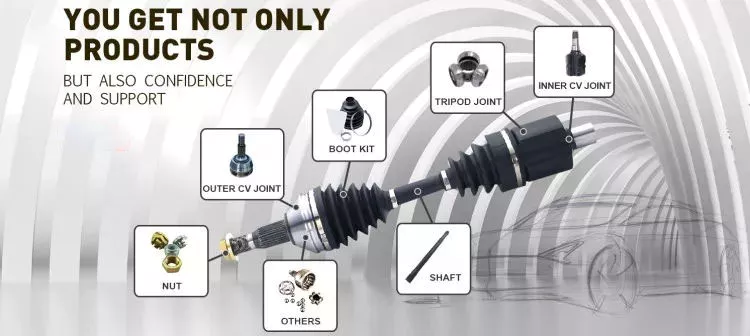
What maintenance practices are essential for prolonging the lifespan of PTO drive shafts?
To prolong the lifespan and ensure the optimal performance of PTO (Power Take-Off) drive shafts, regular maintenance practices are essential. By following these maintenance practices, operators can prevent premature wear, identify potential issues early on, and maximize the longevity of the drive shaft. Here are some key maintenance practices to consider:
1. Lubrication:
Proper lubrication is crucial for the smooth operation and longevity of PTO drive shafts. Regularly lubricate the drive shaft’s universal joints, splines, and other moving parts as per the manufacturer’s recommendations. Choose a high-quality lubricant suitable for the specific application and environmental conditions. Lubrication helps reduce friction, prevent excessive wear, and protect against corrosion.
2. Inspection:
Regular visual inspections are important for identifying any signs of wear, damage, or misalignment in the PTO drive shaft. Inspect the drive shaft and its components for cracks, dents, loose bolts, or signs of excessive wear. Pay attention to the universal joints, splines, shielding, and safety features. If any issues are detected, take prompt action to rectify them to prevent further damage and ensure safe operation.
3. Torque Checks:
Periodically check the torque on fasteners, such as bolts and nuts, that secure the PTO drive shaft and its components. Vibrations and normal operation can cause these fasteners to loosen over time, potentially leading to misalignment or damage. Use a torque wrench to ensure that the fasteners are properly tightened according to the manufacturer’s specifications. Regular torque checks help maintain the integrity and stability of the drive shaft assembly.
4. Alignment:
Maintaining proper alignment between the PTO drive shaft, the primary power source, and the implement is essential for efficient power transfer and preventing excessive wear. Check the alignment of the drive shaft regularly, ensuring that it is straight and properly seated in its connections. Misalignment can cause vibration, increased stress, and premature failure. Make adjustments as necessary to achieve proper alignment.
5. Shear Pin or Torque Limiter Replacement:
If the PTO drive shaft is equipped with a shear pin or torque limiter as a safety feature, it is important to replace these components when they have been activated or damaged. Shear pins are sacrificial components that break under excessive torque, protecting the drive shaft and connected equipment. Replace the shear pin or torque limiter with the correct type and specifications recommended by the manufacturer to ensure continued safety and proper function.
6. Shielding and Guarding:
Inspect the shielding and guarding of the PTO drive shaft regularly to ensure they are intact and in good condition. These protective covers are designed to prevent contact with moving parts and reduce the risk of entanglement or injury. Replace any damaged or missing shielding promptly to maintain operator safety and prevent debris from entering the drive shaft assembly.
7. Environmental Protection:
Consider the environmental conditions in which the PTO drive shaft operates and take appropriate measures to protect it. If the drive shaft is exposed to moisture, dirt, or corrosive substances, clean it regularly and apply appropriate coatings or protective measures to prevent rust and corrosion. Additionally, ensure that the drive shaft is stored in a dry and clean environment when not in use.
8. Manufacturer’s Guidelines:
Follow the maintenance guidelines provided by the manufacturer of the PTO drive shaft. These guidelines may include specific maintenance intervals, recommended lubricants, torque specifications, and other important instructions. Adhering to the manufacturer’s guidelines ensures that the drive shaft is maintained in accordance with its design and engineering specifications, maximizing its lifespan and performance.
By implementing these essential maintenance practices, operators can significantly prolong the lifespan of PTO drive shafts. Regular lubrication, inspections, torque checks, alignment checks, timely replacement of safety features, proper shielding and guarding, environmental protection, and adherence to manufacturer’s guidelines all contribute to the drive shaft’s longevity, reliability, and safe operation.
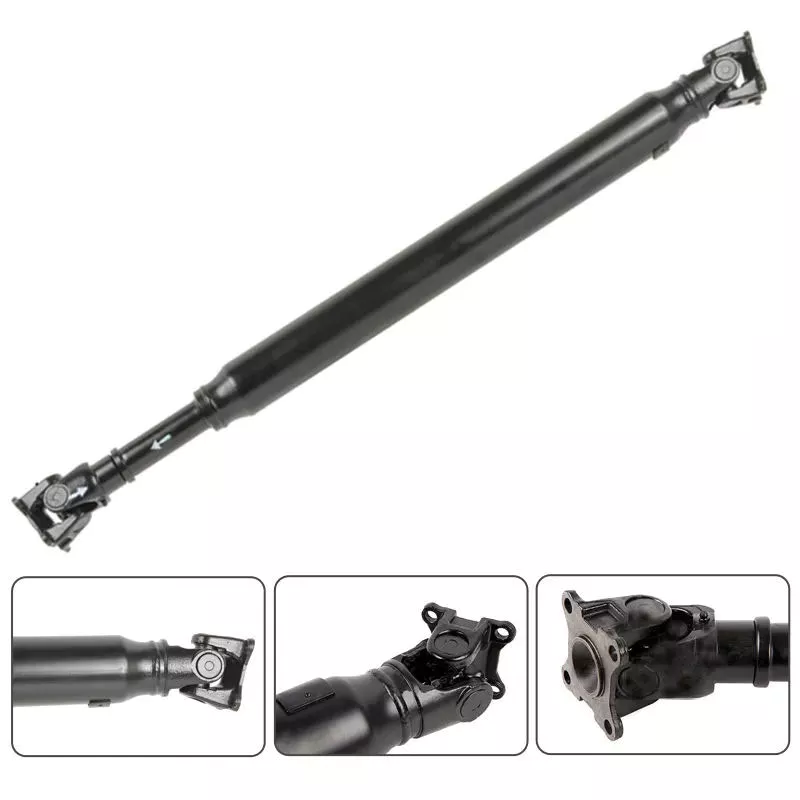
How do PTO drive shafts handle variations in load and torque during operation?
PTO (Power Take-Off) drive shafts are designed to handle variations in load and torque during operation, providing a flexible and efficient power transmission solution. They incorporate several mechanisms and features that enable them to accommodate changes in load and torque. Here’s how PTO drive shafts handle variations in load and torque:
1. Flexible Couplings:
PTO drive shafts typically utilize flexible couplings, such as universal joints or constant velocity joints, at both ends. These couplings allow for angular misalignment and compensate for variations in load and torque. They can accommodate changes in the orientation and position of the driven equipment relative to the power source, reducing stress on the drive shaft and its components.
2. Spring-Loaded Friction Discs:
Some PTO drive shafts incorporate spring-loaded friction discs, commonly known as torque limiters or overload clutches. These devices provide a mechanical means of protecting the drive shaft and connected equipment from excessive torque. When the torque exceeds a predetermined threshold, the friction discs slip, effectively disconnecting the drive shaft from the power source. This protects the drive shaft from damage and allows the system to handle sudden increases or spikes in torque.
3. Slip Clutches:
Slip clutches are another mechanism used in PTO drive shafts to handle variations in torque. Slip clutches allow controlled slippage between the input and output shafts when a certain torque level is exceeded. They provide a means of limiting torque transmission and protecting the drive shaft from overload. Slip clutches can be adjustable, allowing the desired torque setting to be customized based on the specific application.
4. Torque Converters:
In certain applications, PTO drive shafts may incorporate torque converters. Torque converters are fluid coupling devices that use hydraulic principles to transmit torque. They provide a smooth and gradual ramp-up of torque, which helps in handling variations in load and torque. Torque converters can also provide additional benefits such as dampening vibrations and mitigating shock loads.
5. Load-Bearing Capacity:
PTO drive shafts are designed with sufficient load-bearing capacity to handle variations in load during operation. The material selection, diameter, and wall thickness of the drive shaft are optimized based on the anticipated loads and torque requirements. This allows the drive shaft to effectively transmit power without excessive deflection or deformation, ensuring reliable and efficient operation under different load conditions.
6. Regular Maintenance:
Proper maintenance is essential for the reliable operation of PTO drive shafts. Regular inspection, lubrication, and adjustment of the drive shaft components help ensure optimal performance and longevity. By maintaining the drive shaft in good condition, its ability to handle variations in load and torque can be preserved, reducing the risk of failures or unexpected downtime.
It’s important to note that while PTO drive shafts are designed to handle variations in load and torque, there are limits to their capacity. Exceeding the recommended load or torque limits can lead to premature wear, damage to the drive shaft and connected equipment, and compromise safety. It is crucial to operate within the specified parameters and consult the manufacturer’s guidelines for the specific PTO drive shaft model being used.
By incorporating flexible couplings, torque limiters, slip clutches, torque converters, and ensuring adequate load-bearing capacity, PTO drive shafts can effectively handle variations in load and torque during operation. These features contribute to the versatility, efficiency, and reliability of PTO drive shaft systems across a wide range of applications.

How do PTO drive shafts contribute to transferring power from tractors to implements?
PTO (Power Take-Off) drive shafts play a crucial role in transferring power from tractors to implements in agricultural and industrial applications. They provide a mechanical connection that enables the efficient and reliable transfer of rotational power from the tractor’s engine to various implements. Here’s a detailed explanation of how PTO drive shafts contribute to transferring power:
1. Power Source:
A tractor serves as the primary power source in agricultural operations. The engine of the tractor generates rotational power, which needs to be transmitted to the attached implements to perform specific tasks. The power generated by the engine is harnessed and transferred through the PTO drive shaft.
2. PTO Output Shaft:
Tractors are equipped with a PTO output shaft, typically located at the rear of the tractor. The PTO output shaft is specifically designed to transfer power to external devices, such as implements or machinery. The PTO drive shaft connects directly to this output shaft to receive power.
3. PTO Drive Shaft Configuration:
The PTO drive shaft consists of a rotating shaft with splines at both ends. These splines provide a secure and robust connection to the PTO output shaft of the tractor and the input shaft of the implement. The drive shaft is designed to transmit rotational power while accommodating the varying distance and alignment between the tractor and the implement.
4. Attachments and Implement Input Shaft:
The other end of the PTO drive shaft connects to the input shaft of the implement. The implement may have a specific attachment point or a PTO driveline connection designed to receive the drive shaft. The implement’s input shaft is precisely aligned with the drive shaft to ensure efficient power transfer.
5. Mechanical Power Transfer:
Once the PTO drive shaft is properly connected to both the tractor’s PTO output shaft and the implement’s input shaft, it serves as a mechanical link between the two. As the tractor’s engine runs, the rotational power generated by the engine is transferred through the PTO output shaft and into the drive shaft.
6. Rotational Power Delivery:
The PTO drive shaft rotates at the same speed as the tractor’s engine, effectively delivering the rotational power to the implement. The implement utilizes this power to drive its specific machinery or perform various tasks, such as cutting, tilling, mowing, or pumping.
7. Power Transmission Efficiency:
PTO drive shafts are designed to maximize power transmission efficiency. They are typically constructed using high-strength materials and precision engineering to minimize energy losses and ensure a reliable transfer of power. Proper maintenance, including lubrication and periodic inspections, is essential to maintain optimal power transmission efficiency.
8. Safety Considerations:
PTO drive shafts can pose safety risks if not used correctly. It is important to follow safety guidelines and ensure that the drive shaft is properly guarded to prevent contact with rotating components. Operators should also exercise caution during attachment and detachment procedures to avoid accidents or injuries.
In summary, PTO drive shafts serve as the vital link between tractors and implements, facilitating the transfer of rotational power. They provide a mechanical connection that efficiently transmits power from the tractor’s engine to the implement, enabling a wide range of agricultural and industrial tasks to be performed effectively and efficiently.


editor by CX 2024-03-04